It’s been a wild couple of weeks.
So: remember how I said I would be asking for feedback? Initially I planned on working my way through the card game tutorial, posting when I had specific questions. But I soon realized that the conversation wouldn’t be terribly interesting. Questions like, “I can’t figure out how to turn on the samoflange,” with responses like, “Oh, you just need to use the hydrospanner.” These sorts of interactions are a dime-a-dozen in the Unity Developers Community – fleeting and one-dimensional.
I thought I might do something different! Something with meat – something that might actually prompt a proper conversation. I didn’t know enough to really talk about the technical aspects of game dev, so instead I decided to ask about a fluffier topic, albeit one I still had a lot to learn about: mechanical design.
Game mechanics are the game’s levers, so to speak: how players interact with the game world and express agency through action. My current dev project is a digital card game – which by its nature has a heavy emphasis on mechanics. I thought, “Maybe I can present my game concept and ask for feedback on a specific mechanical element!” Which I did.
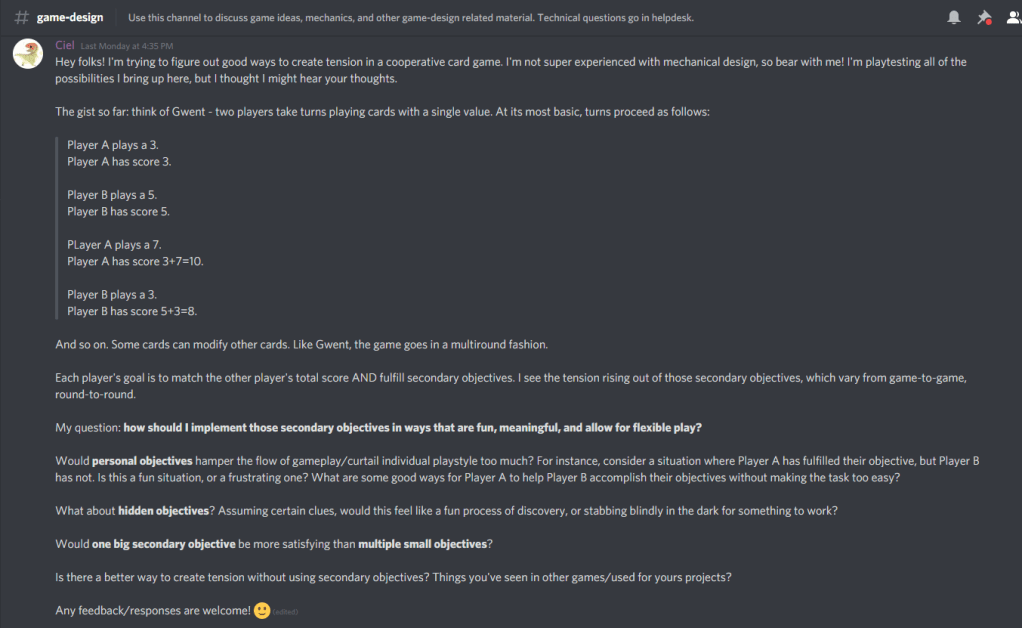
A little longer than I initially intended. Maybe a little vague. But much like academia, indie game development is as much about protecting your ideas as getting them out there. Say too much, too soon, and you might find your brilliant idea stolen by a faster-moving dev team. In a fad industry like game dev, you gotta be careful.
But maybe I was too careful. An hour passed. Two hours. No response.
Did I mess up? Was I asking for too much? Did I come across the wrong way? Am I making myself look like an asshole? Is my reputation in the community already ruined??
I stepped away for a bit. When I came back:

Crap. I felt silly – like a kid playing at being a spy. Why didn’t I give more context? Why did I choose to be so stingy with details?
Another response came shortly after:
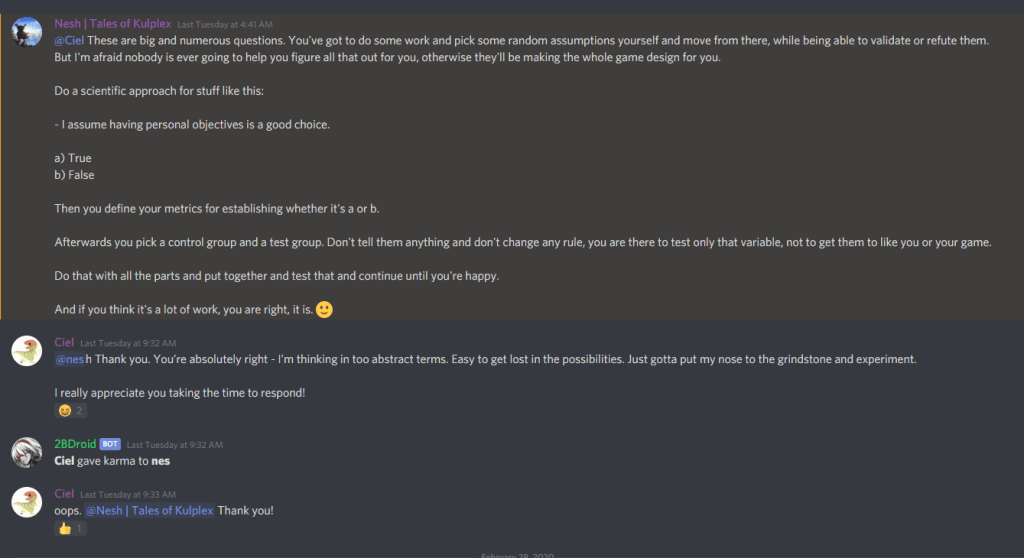
I was mortified. Rather than a conversation like I had hoped, I was getting a stern lecture. Nesh gave some helpful advice, but it was couched in judgment.
Too shaken to answer Alcratz’s questions, I thanked Nesh for their input and slammed my laptop shut.
The words rang in my head for hours afterwords. “… otherwise they’ll be making the whole game design for you.” “… if you think it’s a lot of work, you are right, it is.” I felt like I had breached some unspoken rule. Like I had been asking people to do my work for me (even if that wasn’t really the case). Even though I had prefaced my post with a disclaimer about being new to mechanical design, I felt like I had been revealed as a beginner.
So not a great first attempt. But I have learned something: when it comes to asking for advice, this community values specificity over abstraction, and methodology above all. With that in mind, I’ve got a new plan, a new approach! Hopefully I’ll get a better response on my next attempt.
Meanwhile, I’ve been exploring offshoots of the UDC: development silos dedicated to a single project. The UDC binds these projects together in a public space, but the projects have private servers of their own where they coordinate, exchange advice, and show off their work without fear of it being stolen. I thought I might wriggle into a few of those servers, give advice like I did with James.
Speaking of James: turns out he hadn’t ghosted me after all!
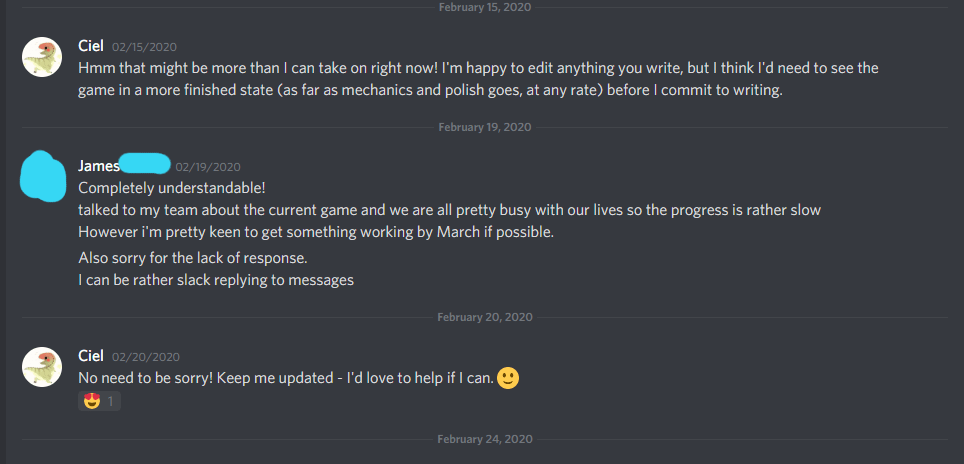
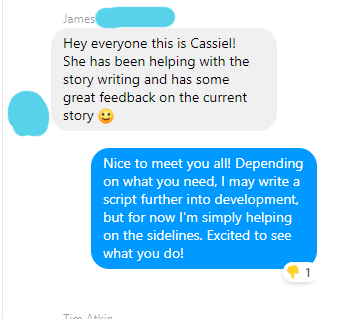
After my unfortunate experience asking for advice in the UDC, I asked him what he thought about the culture in the community, and good ways to ask questions. During this conversation, he invited me to the Facebook group where his team chats – and I was happy to join! With a caveat:
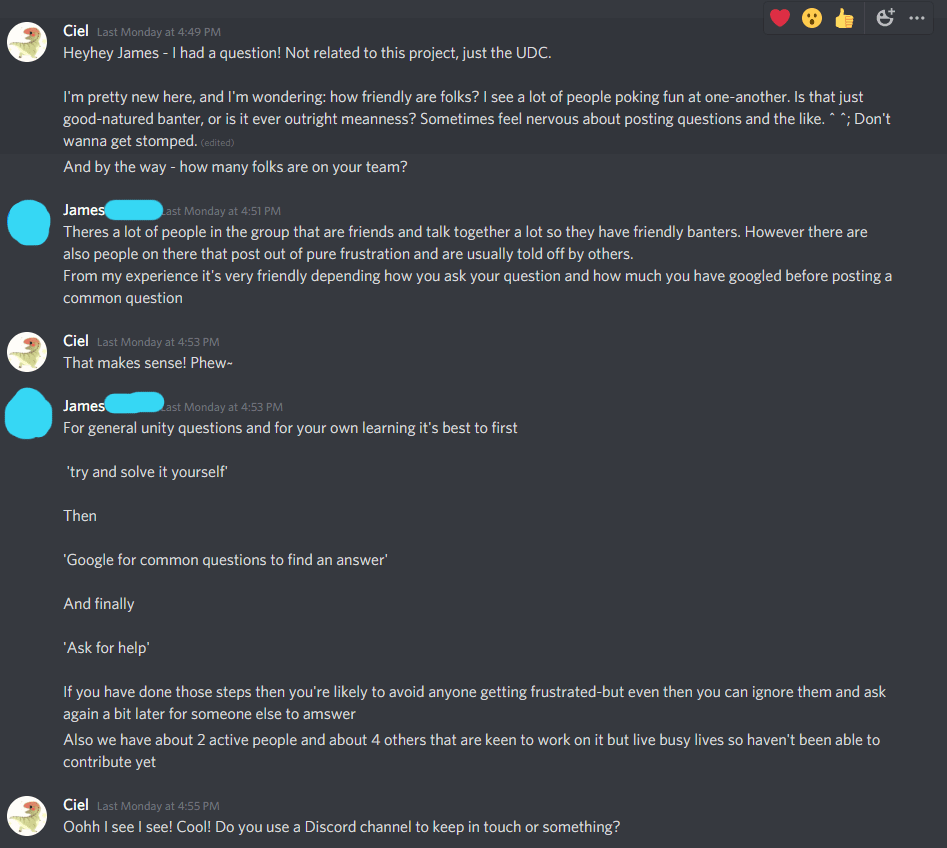
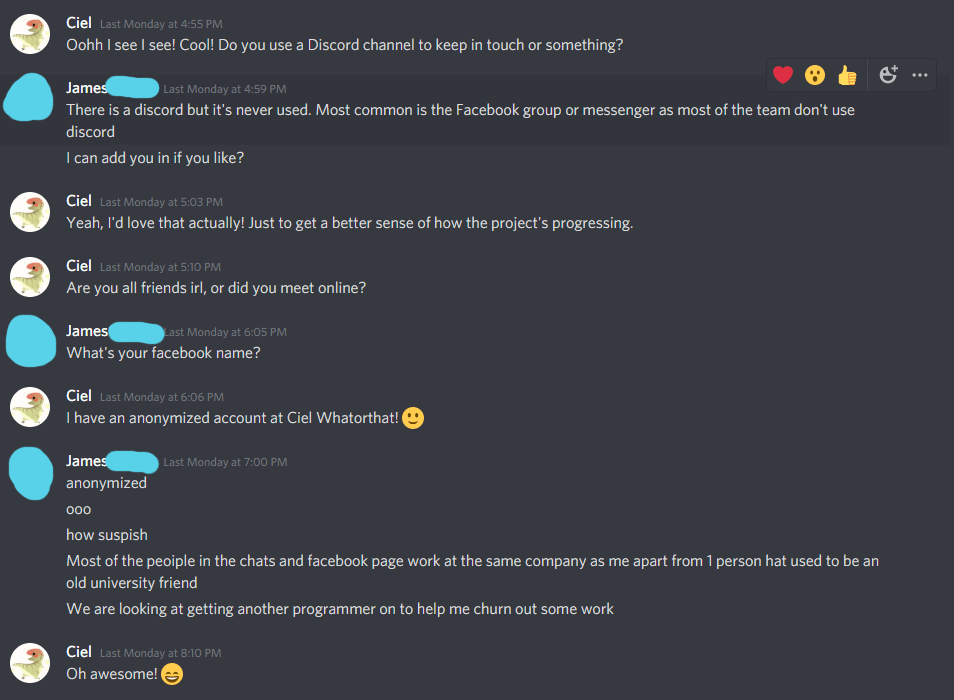
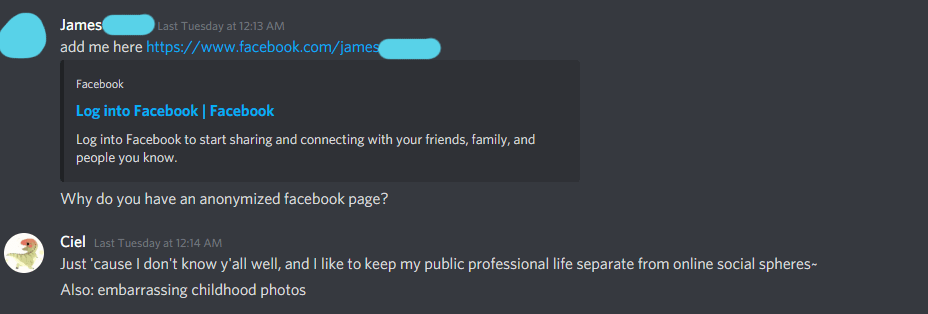
I’m being half-honest here. I do have some embarrassing childhood photos of myself floating around on the Internet, but the bigger concern is that they’re all pre-transition.
For those who don’t know: gaming communities are infamously hostile to trans people – trans women most of all. I may not be a woman myself, but the fact I’m feminine-presenting puts me at serious risk of being labelled a so-called “trap.”
But after thirty minutes of fussing with my anonymized account (probably seeming more than a little suspicious in the process), I threw caution to the wind and joined with my proper account. I was scared, but so far: no comments, no meanness! Here’s hoping it stays that way.
I introduced myself to the team, joined the Discord server, got a link to the game’s itch.io page. A few days later, James reached out for advice.
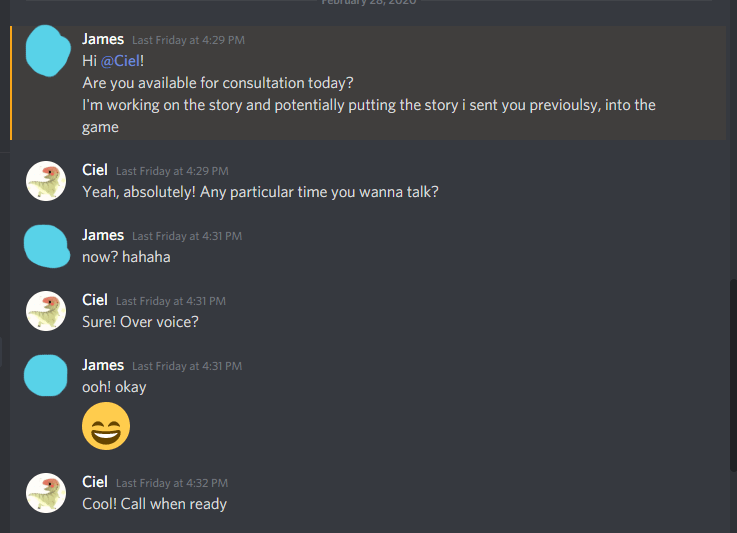
We spoke at length – discussing where I thought the story could go, what might hamstring the narrative, and how game mechanics could inform the player’s experience of the story. And in the process, I got a better sense of James’ vision. I cared about his game. I wanted to see it work. Whereas previously I was only interested in advising him, now I thought I might actually want to contribute.
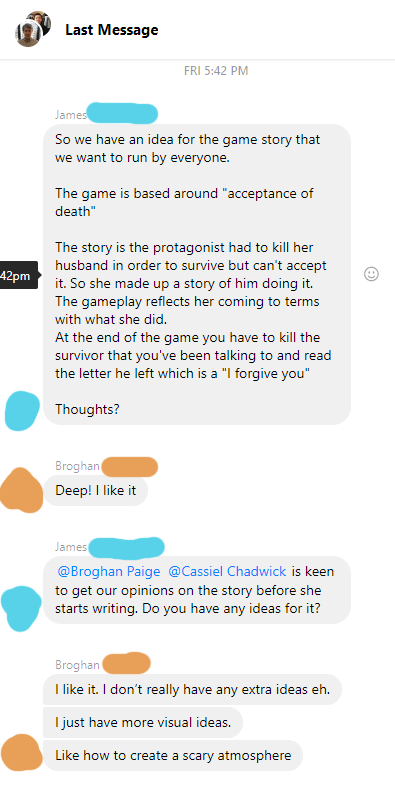
I’ve committed to making an outline for the project which I’ll be showing the team in a month. When I do, you can expect to see their feedback here!
But that wasn’t the only game I was invited to work on through the UDC. Someone named Andi posted an ad in the Collaboration channel:

I reached out to Andi – and instantly got a reply:
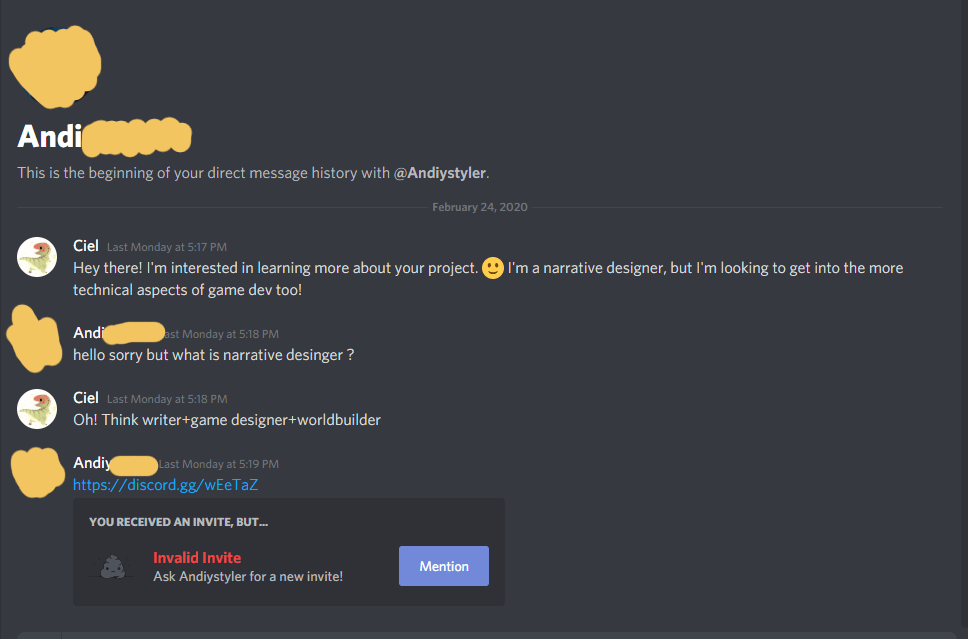
Within moments of joining the Discord, I realized this project was doomed to failure. The project description told me all I needed to know:
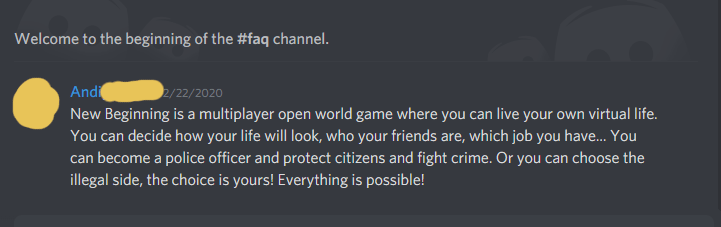
When game devs put too much energy into brainstorming and not enough into scope-setting, we get “feature bloat” – where a preponderance of features weighs the development process down, expanding the game beyond what the dev team can handle. The game Andi was describing was way beyond what a team of beginners could handle.
After introducing myself, I started asking a few pointed questions – partly out of curiosity, and partly to help them see the danger of their present course.
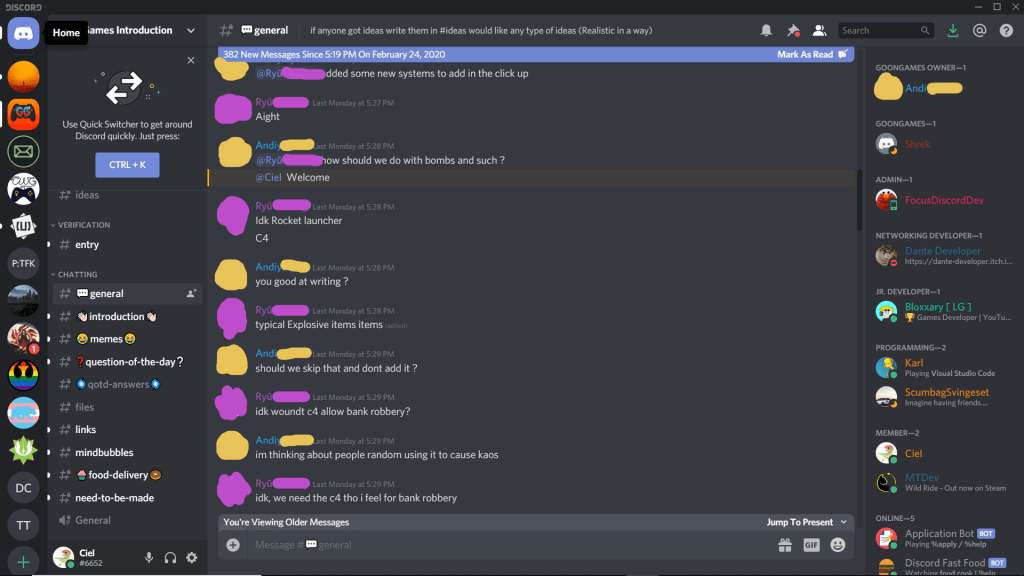
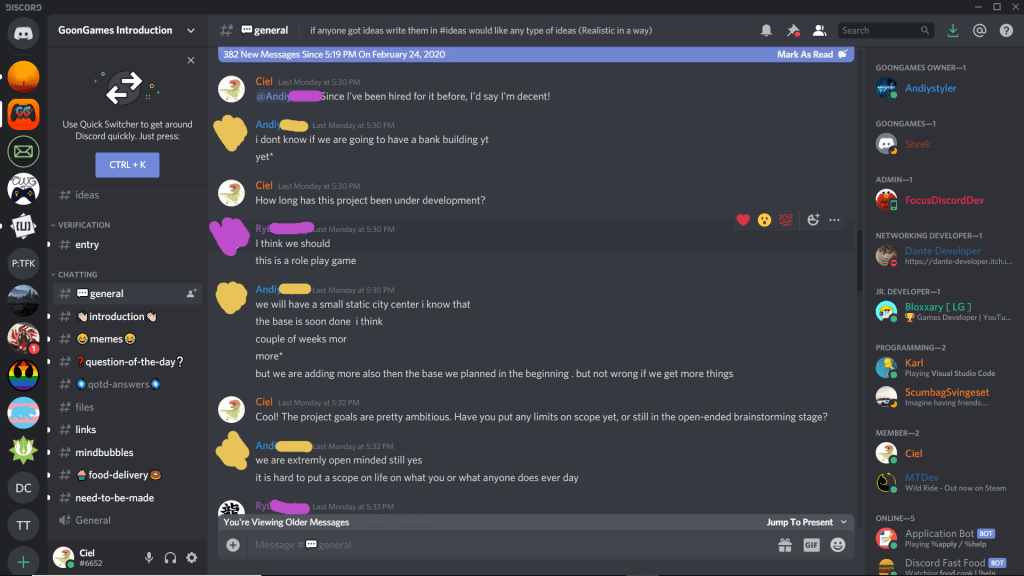
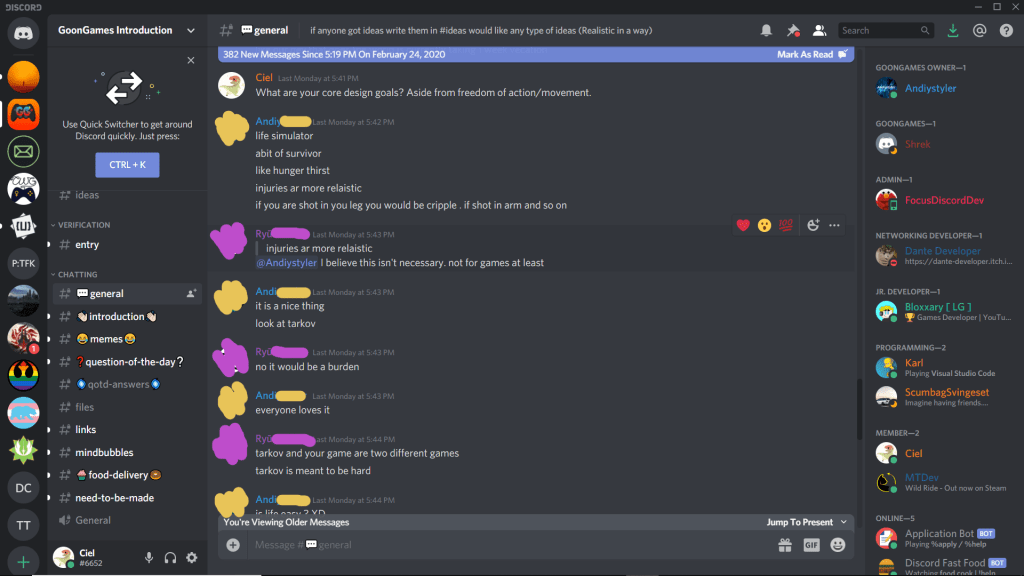
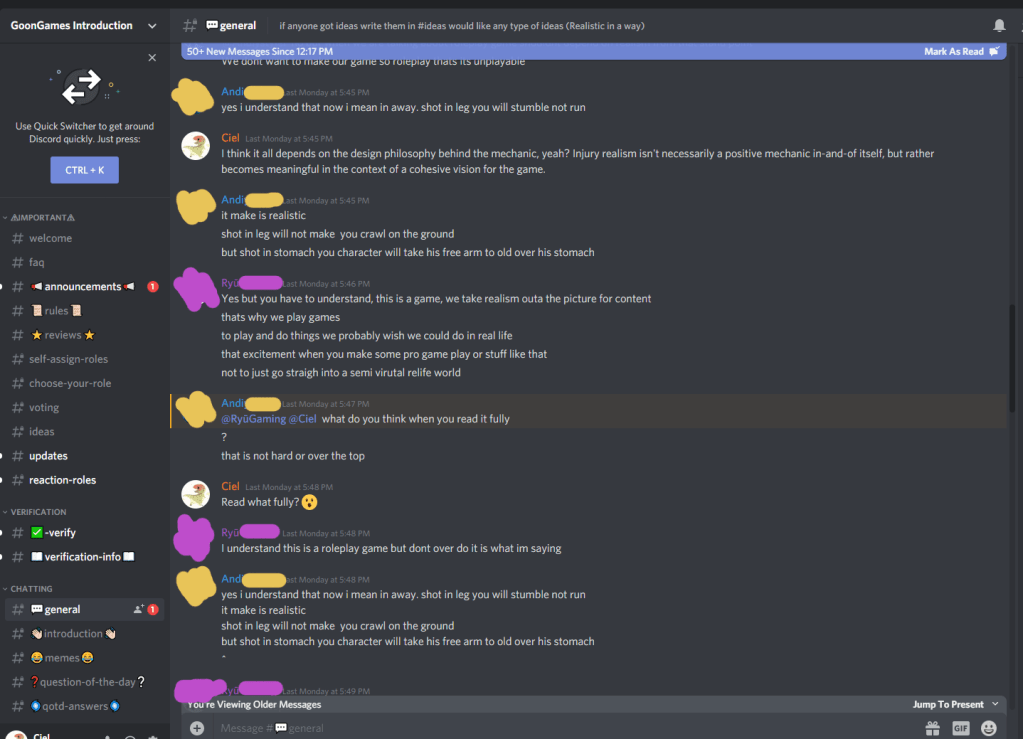
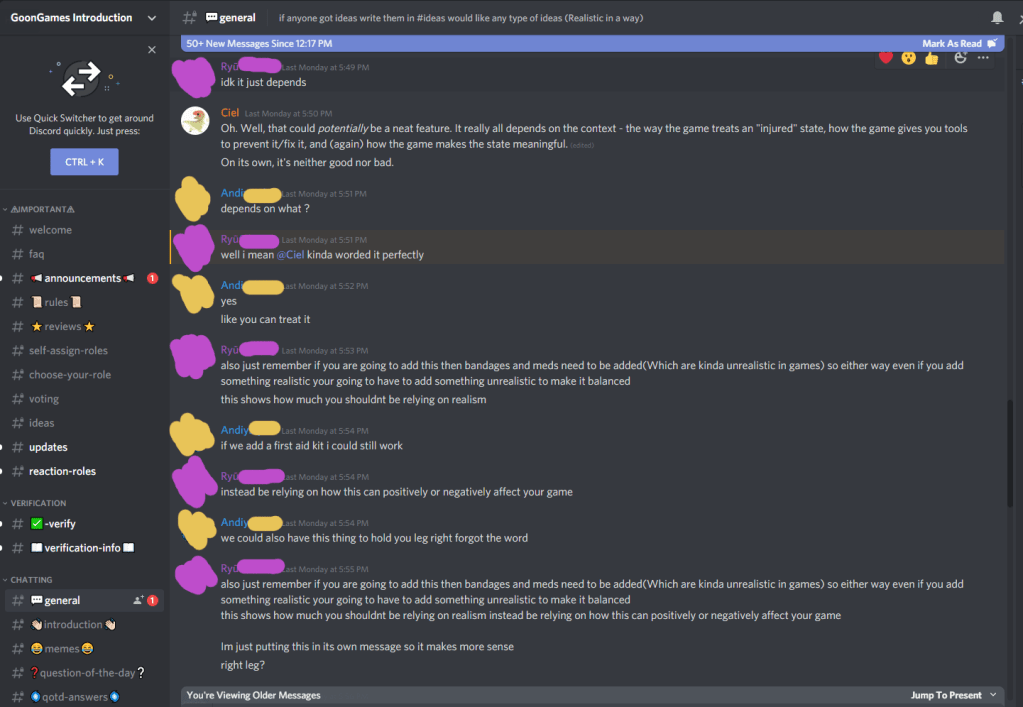
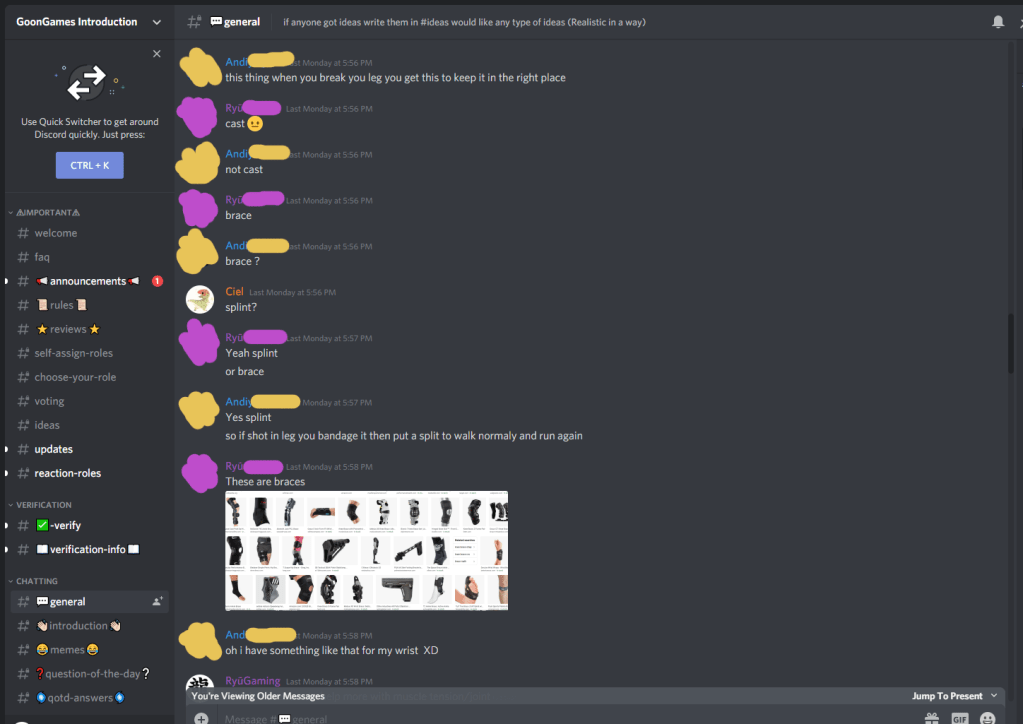
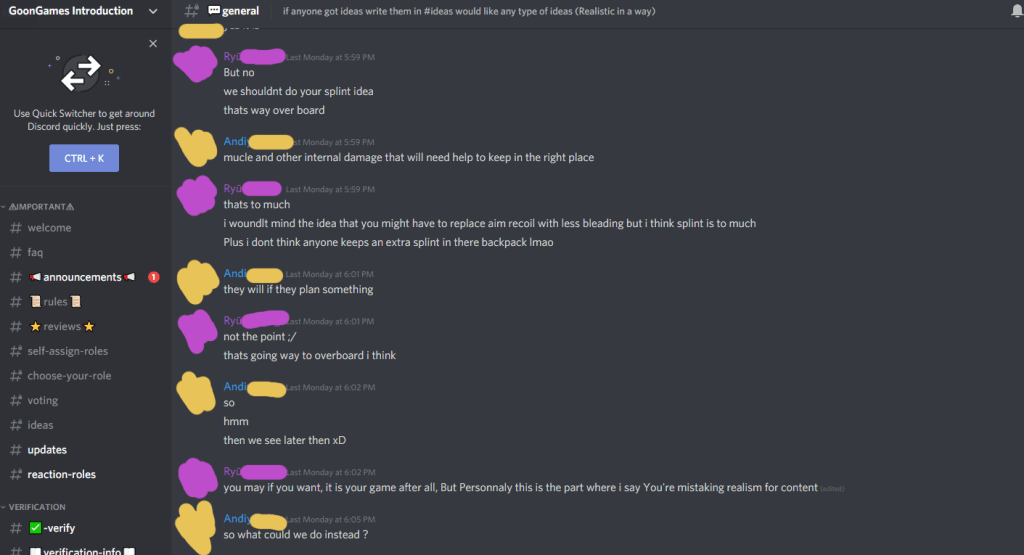
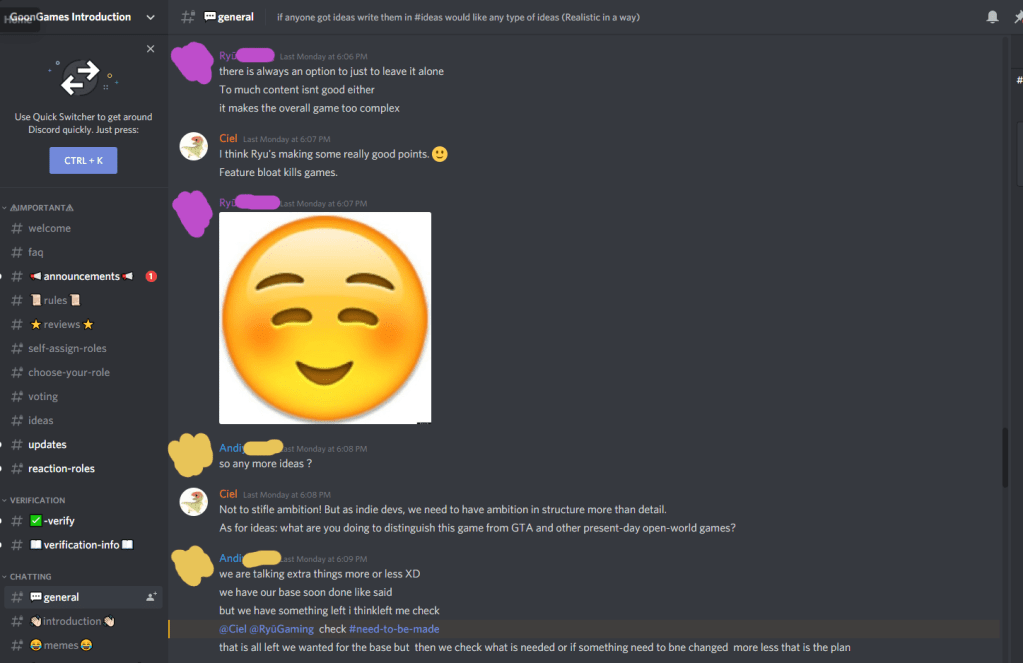
I quickly realized that this wasn’t something I could talk Andi out of – they were just gonna have to figure it out by making the mistake themselves. Despite the fact that I seemed to be talking to a brick wall, I found the whole conversation charming. Like being back on the playground, hearing silly arguments between friends.
So much of game dev comes down to these little conversations. Asking for feedback, getting input, and collaboratively shaping the game through (dis)agreement.
Now that I’ve carved out a place for myself in these two dev teams, my next task is getting more involved with each – playing an active role in those little conversations, asking for input, and maybe even making friends.
But before that, I’ll be posting an example of my work in the broader UDC – something physical, that I can ask methodological advice on. I’m terrified, but this time I’ll have some help along the way. More details to come!
 Learn(Make(Games))